Aphasia Basics & Education

Broca’s vs. Wernicke’s Aphasia: Key Differences and Home Strategies

Caregiver and stroke survivor practicing speech tasks at a home table with picture cards, a tablet, and a photo album

After a stroke or brain injury, aphasia changes how a person speaks, understands, reads, and writes. This article explains the key differences between Broca’s and Wernicke’s aphasia and offers practical, easy-to-do home activities caregivers and survivors can use to boost…

Broca’s vs. Wernicke’s Aphasia: Key Differences Explained

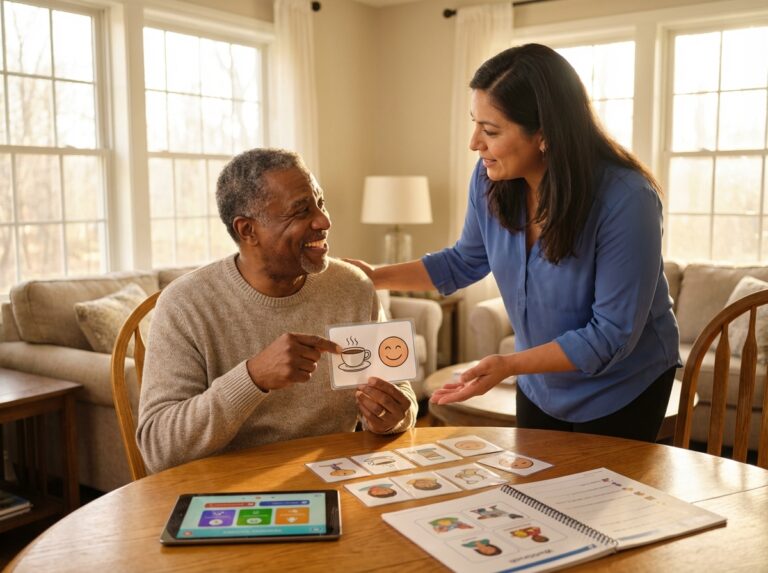
Caregiver and person with aphasia practicing speech tasks at home with picture cards and a tablet, warm supportive atmosphere

Broca’s and Wernicke’s aphasia are two common post-stroke language disorders with distinct patterns: one affects speech production, the other comprehension. This article compares their causes, symptoms, and everyday impacts, then offers practical, evidence-informed home practice ideas and caregiver strategies for…

Understanding Aphasia: A Comprehensive Guide for Families

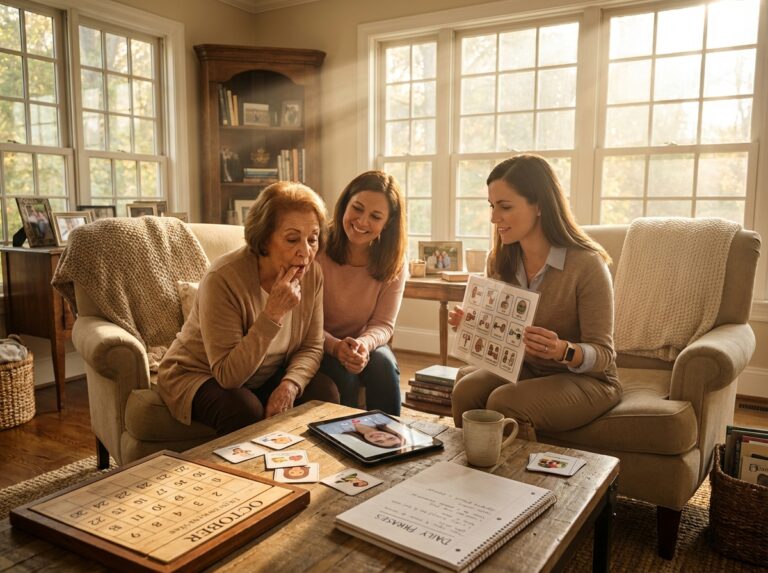
Family practicing speech and language activities at home with picture cards, a notebook script, and a tablet showing a therapy app

After stroke or brain injury, aphasia changes how people speak, understand, read, and write. This practical guide helps families build safe, evidence-informed home practice routines that boost communication, memory, and connection. It outlines how to assess strengths, set goals with…