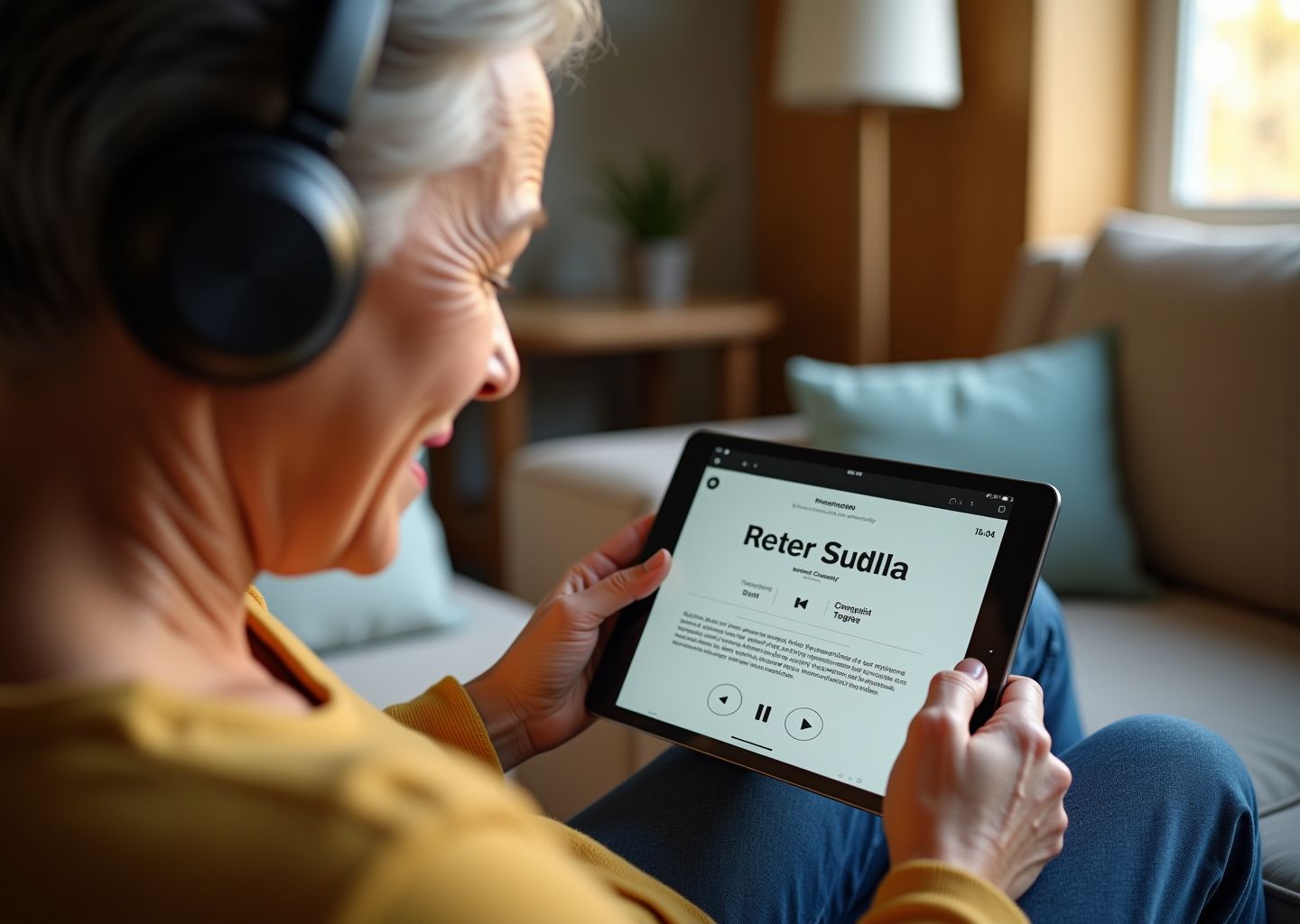
Audiobooks offer a practical, low-effort way to support language recovery after stroke or brain injury. This article explores how audiobooks can help people with aphasia, what accessibility features matter, how to choose suitable listening material and apps, and practical home practice strategies caregivers and speech-language pathologists can use to boost comprehension, memory, social connection, and daily independence and well-being.
Why audiobooks can support language recovery and connection
Finding the right audiobook for someone with aphasia goes beyond picking a bestseller. It’s about carefully matching the material, the narrator, and the technology to support communication recovery. A book that is too fast, too complex, or too difficult to navigate can lead to frustration. But the right choice can open up a world of language practice, enjoyment, and connection. This guide offers a step-by-step approach to selecting audiobooks and listening tools that are truly accessible.
The Narrator, Pace, and Sound
Listen for clarity and rhythm.
The narrator’s voice is your most important consideration. Look for a speaker with clear articulation and a natural, steady pace. Overly theatrical or dramatic readings can be difficult to follow. Most professional narrators speak at around 150 to 160 words per minute, which can be too fast for someone processing language differently. Before committing to a book, listen to a 5-10 minute sample together. Does the voice feel calm and easy to understand? Or does it feel rushed and overwhelming?
Prioritize adjustable playback speed.
Nearly all modern audiobook apps allow you to change the playback speed. This feature is essential. Slowing the narration down to 0.75x or 0.9x can make a huge difference in comprehension without distorting the sound too much. Test this feature during your sample listen. Some apps handle slowing down better than others. The goal is to find a speed that allows for comfortable processing, not one that makes the narrator sound unnatural.
Content, Structure, and Genre
Start with the familiar and predictable.
Choose topics that align with the listener’s interests, hobbies, or life experiences. A memoir about a historical event they lived through or a non-fiction book about a beloved hobby provides a familiar context that supports comprehension. Short story collections are excellent because each story is a self-contained, manageable listening task. Predictable narrative structures, like those in mysteries or even children’s chapter books, are often easier to follow than complex literary fiction with multiple timelines or abstract themes. Some publishers also offer graded or adapted editions of classic novels, which use simpler language and sentence structures.
Look for short chapters.
Attention and energy can fluctuate after a brain injury. Books with short chapters, ideally under 15 minutes, break the content into manageable chunks. This structure makes it easy to plan short, successful listening sessions of 10 to 20 minutes. It also provides natural stopping points that prevent fatigue and create a sense of accomplishment.
Choosing the Right Tools and Platforms
Finding accessible audiobooks doesn’t have to be expensive. Several platforms in the United States offer features well-suited for listeners with aphasia.
- Public Library Apps (Libby/OverDrive)
These are fantastic starting points. With a free library card, you get access to a vast collection of audiobooks. The apps allow you to adjust playback speed, set sleep timers, and download books for offline listening, which is great for avoiding streaming interruptions. - Audible
As the largest commercial platform, Audible has an unparalleled selection and a generous sampling feature for testing books. It is a paid subscription, but its user-friendly interface and reliable performance make it a popular choice. - Accessibility-Focused Services (Bookshare & Learning Ally)
These services are designed for individuals with documented print disabilities. They often provide human-narrated audiobooks in highly accessible formats, sometimes with synchronized text. Membership is required, but they are invaluable resources for those who qualify. - Specialized Reader Apps (Voice Dream Reader)
This app is a powerful tool for therapy. It can read a wide variety of file types and offers extensive customization, including high-quality text-to-speech voices, adjustable speeds, and on-screen text that highlights as it’s read aloud. This multimodal approach is supported by research showing that pairing audio with text can boost comprehension. - Apple Books and Google Play Books
Both platforms sell audiobooks and have built-in players with essential features like speed controls, a skip-back button, and sleep timers. Their interfaces are generally clean and straightforward.
Must-Have Accessibility Features
When evaluating an app or audiobook, think of it like a clinical tool. Certain features are non-negotiable for creating a supportive listening experience.
Simple Navigation and Controls
The interface should be clean, with large, easy-to-read buttons. Complicated menus can be a barrier. A crucial feature is a “skip back” button that rewinds the audio by 10 to 30 seconds. This allows the listener to easily rehear a missed word or sentence without losing their place. Bookmarking to save one’s place is also a key function.
Synchronized Text
The gold standard for accessibility is an audiobook that displays text on the screen and highlights the words as they are spoken. This “karaoke-style” reading reinforces word recognition and helps the listener stay engaged. This feature is often found in specialized formats like EPUB3 or DAISY, which are available through services like Bookshare or with certain books on platforms like Apple Books.
Offline Access
Always choose an app that allows you to download the entire audiobook. This ensures a smooth, buffer-free listening experience that isn’t dependent on a stable internet connection.
How to “Test Drive” an Audiobook
Before starting a full book, conduct a short trial. This simple process can tell you if a title is a good fit.
- Listen to a Sample. Play a 5-minute sample of the book. Pay attention to the narrator’s voice and the complexity of the language.
- Check for Understanding. Pause the audio and ask a few simple questions. “Who is talking?” “Where are they?” “What just happened?” This gives you immediate feedback on comprehension.
- Assess Fatigue. After the sample, check in. Does the listener feel engaged and interested, or do they seem tired or frustrated? Listening should feel like a pleasant activity, not a strenuous test.
By taking the time to select the right materials and tools, you can transform audiobook listening from a passive activity into an active, effective, and enjoyable part of language recovery.
Audiobook Accessibility Checklist
Use this checklist to evaluate a potential audiobook and app for a person with aphasia.
| Feature | Notes |
|---|---|
| Narrator Clarity | Is the voice clear and easy to understand? Is the pacing moderate? |
| Adjustable Speed | Can you slow the playback to 0.75x or 0.8x without major distortion? |
| Simple Content | Is the topic familiar or interesting to the listener? Is the plot straightforward and the vocabulary plain? |
| Short Chapters | Are chapters under 15 minutes long to support attention and reduce fatigue? |
| Easy Navigation | Are there large, clear buttons? Is there a 10-30 second “skip back” button? |
| Synchronized Text | Is a text transcript available? Does it highlight words as they are read? |
| Offline Access | Can the entire book be downloaded to the device? |
| Successful Trial | Did the listener understand a 5-minute sample with minimal frustration? |
Common questions and quick answers
Can someone with severe aphasia use audiobooks?
Yes, but with significant adaptations. For individuals with severe auditory comprehension difficulties, an audiobook alone can be overwhelming. The goal shifts from following a complex plot to engaging with sound, rhythm, and simple, supported language. Success depends on pairing the audio with strong visual and contextual supports.
Actionable Tip: Use a children’s picture book. As the narrator reads, point to the corresponding pictures and words. Pause after each sentence to allow for processing time. Focus on the shared experience, not comprehension quizzes.
How long and how often should listening sessions be?
Start small and prioritize consistency. Aim for 5 to 15-minute sessions once or twice a day. Short, frequent practice is more effective than one long, exhausting session because it respects cognitive fatigue and helps build a sustainable routine. Some clinical trials use a 30-minute daily listening model, which can be a long-term goal.
Actionable Tip: Schedule listening sessions for times of day when the person has the most energy, like in the morning. Use a timer to define the session end, creating a predictable and low-pressure structure.
Should I pair the audio with written text? Which formats are best?
Absolutely. Pairing audio with text provides multimodal reinforcement, which can significantly boost comprehension. Seeing the words while hearing them helps connect the sound of a word to its written form, supporting both listening and reading skills. The best formats are those with synchronized highlighting, where words light up as they are read.
Actionable Tip: Look for EPUB3 or DAISY formats on platforms like Voice Dream Reader. A simple, low-tech option is to get the physical book or an ebook from the library and have the listener follow along with their finger.
How can I adjust playback speed without losing comprehension?
Make small, gradual adjustments. Most apps allow you to slow the speed to 0.75x or 0.8x. Slowing the narration provides extra processing time, but slowing it too much (below 0.7x) can distort the sound and make speech rhythm unnatural, hindering comprehension. The ideal speed is the slowest setting that still sounds clear and natural.
Actionable Tip: Before starting a book, listen to a one-minute sample at normal speed, then at 0.9x, then at 0.8x. Ask the listener which speed felt the most comfortable and understandable.
Which apps offer the best accessibility features and free options?
Public library apps are the best starting point for free access. Apps like Libby and OverDrive connect to your local library card, offering a huge catalog of audiobooks at no cost. For advanced features, specialized apps offer more control.
Actionable Tip: Start with Libby for free content. If you need more advanced features like high-quality text-to-speech or synchronized highlighting with imported files, consider a paid app like Voice Dream Reader. Always use the free trial period to test if an app meets your needs.
How can we measure progress from audiobook practice?
Track small, consistent changes in comprehension, engagement, and communication. Progress isn’t just about test scores; it’s also about increased confidence, enjoyment, and the ability to sustain attention for longer periods. A simple log can make these changes visible over time.
Actionable Tip: Create a simple listening log. After each session, note the date, duration, and ask one or two consistent questions (e.g., “Who was the story about?” “Where did it happen?”). You can also use a 1-to-5 scale for enjoyment.
What should I do if the listener gets frustrated or fatigued?
Stop immediately and take a break. Frustration is a clear sign that the cognitive load is too high. Pushing through fatigue is counterproductive and can create negative associations with what should be an enjoyable activity. The key is to validate the feeling and adjust the plan.
Actionable Tip: Say, “This seems tiring. Let’s stop for today and try again tomorrow.” Later, consider what caused the frustration. Was the book too complex? The session too long? The room too noisy? Adjust one variable before the next session.
What is the caregiver’s role during listening practice?
Be a supportive partner, not a teacher. Your role is to facilitate the experience by managing the technology, creating a comfortable environment, and gently scaffolding comprehension. The focus should be on connection and shared enjoyment, which creates a positive context for language practice.
Actionable Tip: Instead of quizzing, make comments that invite a simple response. For example, say “Wow, he sounds worried,” and look for a nod or facial expression. This models interaction without pressure.
How can we integrate audiobooks with formal speech therapy homework?
Collaborate with the Speech-Language Pathologist (SLP). An SLP can help select audiobooks with specific vocabulary or sentence structures that align with therapy goals. Using audiobooks for homework provides a way to practice targeted skills with engaging, real-world material.
Actionable Tip: Ask the SLP for a list of 5-10 target words to listen for in a chapter. When a word comes up, pause the audio and practice saying it or use it in a simple phrase.
What if the listener also has hearing loss?
Address the hearing loss first. Untreated hearing loss can make it impossible to distinguish speech sounds clearly, defeating the purpose of audiobook practice. An audiologist can assess hearing and properly fit hearing aids or other assistive devices.
Actionable Tip: Use headphones or ensure the listener’s hearing aids are connected to the device via Bluetooth. This delivers the sound directly to the ear, minimizing background noise and improving clarity.
Are there audiobooks in languages other than English?
Yes, most major platforms offer large catalogs in various languages, especially Spanish. For bilingual or multilingual individuals with aphasia, listening in their most comfortable or dominant language is crucial for comprehension and engagement.
Actionable Tip: On platforms like Audible or Libby, use the search filter to browse by language. Start with content in the language the person used most frequently before their brain injury.
Is it legal to download audiobooks? What about copyright?
Downloading from legitimate services for personal use is perfectly legal. Services like Libby, Audible, or Apple Books have agreements with publishers that allow you to borrow or purchase and download files for your own listening. Copyright law restricts sharing or publicly performing these files.
Actionable Tip: Stick to official library apps and commercial platforms to ensure you are respecting copyright. Avoid peer-to-peer file-sharing sites, which often distribute content illegally.
Are podcasts a good alternative to audiobooks?
They can be, but require careful selection. Many podcasts are conversational with multiple speakers, interruptions, and background music, which can be very difficult for someone with aphasia to follow. Audiobooks typically have a single, clear narrator and a linear structure.
Actionable Tip: If you try podcasts, look for single-narrator, scripted shows with clear audio and minimal sound effects, such as a history or storytelling podcast. Always listen to a sample first.
Key takeaways and practical next steps
We’ve covered the why and how of using audiobooks for aphasia. Now, let’s bring it all together into a practical plan you can start using at home. This is about turning listening into a supportive, effective, and enjoyable part of the recovery journey.
Here are the core principles to keep in mind as you begin.
- Accessibility First. Always choose audiobooks and apps with features that support the listener. This means clear narration, adjustable playback speed, and simple controls. The goal is to reduce frustration, not add to it.
- Short, Frequent Sessions. Consistency is more important than duration. Aim for short listening periods of 5 to 20 minutes, once or twice a day. This respects attention spans and energy levels, making practice sustainable.
- Pair with Supports. Listening doesn’t have to happen in isolation. Pairing audio with visual aids like the book’s text, picture cards, or written keywords can significantly boost comprehension and engagement.
- Personalize Everything. The most effective practice is built around the listener’s interests. Select books on topics they love, whether it’s history, gardening, or a favorite mystery series. Motivation is a powerful tool for recovery.
A Sample Four-Week Home Practice Plan
This plan is a starting point. Feel free to adapt the duration, activities, and materials to fit the listener’s needs and progress. The key is to start small and build confidence.
| Week | Goal | Session Template (5–20 mins) | Sample Activities | How to Measure Progress |
|---|---|---|---|---|
| Week 1 | Establish a comfortable routine and build tolerance for listening. | 5–10 minutes daily. Select a book with very short chapters or a collection of short stories on a familiar topic. Listen to one segment together in a quiet space. |
|
Self-Reported Enjoyment. Use a simple 1–5 scale (1 = not at all, 5 = very much) or a thumbs-up/down to gauge enjoyment. The goal is positive association. |
| Week 2 | Begin tracking basic comprehension of the main idea. | 10–15 minutes daily. Continue with a familiar book. Before listening, state the goal, “Let’s listen and find out who the story is about.” |
|
Comprehension Checklist. After each session, check off simple questions. Could the listener identify the main character? Could they identify the setting? Keep it to 2–3 core questions. |
| Week 3 | Encourage active recall and sequencing of events. | 15–20 minutes, 4–5 days a week. Introduce a new short story or the next chapter. Focus on what happens first, next, and last. |
|
Detail Recall. Count the number of accurate key details (people, places, actions) the listener can recall or point to on a picture board. Track the number week over week. |
| Week 4 | Target specific language skills like word retrieval or sentence structure. | 15–20 minutes, 4–5 days a week. Select a passage with repeating vocabulary or simple sentence structures. Inform the listener of the target ahead of time. |
|
Word Retrieval Count. Pause before a predictable word in a sentence and see if the listener can fill it in. Count the number of successful attempts per session. |
Resources and Professional Guidance
You are not alone in this process. Many resources are available to support you. Your local public library is an incredible, free source for audiobooks through apps like Libby. Organizations like the National Aphasia Association offer community, resources, and connection with others on a similar path. Most importantly, a speech-language pathologist (SLP) is your most valuable partner. An SLP can help assess which audiobooks are appropriate, create targeted activities, and integrate listening practice into a comprehensive therapy plan.
Tips for Caregivers and Communication Partners
Your role is to be a supportive guide, not a teacher giving a test.
Scaffolding Success
Help bridge the gaps. Before listening, talk about the book cover and predict what might happen. During listening, pause and provide choices if the listener seems lost (“Was he at the park or the store?”). Use gestures, writing, and pictures to reinforce what’s being heard.
Encouragement is Key
Celebrate all attempts at communication. Effort matters more than accuracy. Acknowledge the hard work involved and keep the atmosphere light and positive. If a session isn’t working, it’s okay to stop and try again another time.
Monitor for Fatigue
Listening is hard work for a brain that is healing. Watch for signs of fatigue, such as increased errors, frustration, yawning, or looking away. It’s always better to end a session on a positive note, even if it’s shorter than planned, than to push through frustration.
This journey is a series of small experiments. Try a new genre, a different narrator, or a new activity. Keep a simple log of what works and what doesn’t. Every person with aphasia is unique, and their path to recovery will be too. By starting small, staying patient, and working with a professional, you can unlock the power of audiobooks to support communication, build confidence, and foster connection.
References
- Aphasia – ASHA — It is estimated that nearly 180,000 people acquire aphasia each year in the United States (National Aphasia Association, n.d.).
- Aphasia Robs Millions of Communication. Boston University Is Helping Them Find Their Voices — Aphasia afflicts two million Americans, and the Sargent attendees are at various stages of recovery.
- NAA Ask the Expert October 2023: Aphasia Research in Action — Recorded live on October 9, 2023.
- Envisioning Accessible Audio-Media Futures with People with Aphasia — This research addresses a significant gap in accessibility studies by focusing on audio-media consumption for people with aphasia.
- Can Listening to Music Improve Attention and Language After Post-Stroke Aphasia? — The goal of this clinical trial is to learn if a music-based intervention can acutely improve three types of attention (alerting, orientating, executive control) and language in individuals with post-stroke aphasia.
- The Voices of Aphasia Came Together for Speaking Out! 2023 — On October 3rd and 4th, The National Aphasia Association’s Speaking Out! 2023 gathered hundreds of people with aphasia, caregivers, and professionals.
- Experiences of using the internet among people with aphasia — The aim of the study was to explore experiences of using the internet and digital participation among people with aphasia (PWA) in Sweden.
- Statistics – National Aphasia Association — Quick Facts: 2,000,000+ People in the U.S. living with aphasia; About one-third of strokes result in aphasia.
Legal Disclaimers & Brand Notices
General Medical Disclaimer: The content of this article, including all tips, practice plans, and recommendations regarding aphasia recovery and rehabilitation, is provided for informational and educational purposes only. It is not intended to be a substitute for professional medical advice, diagnosis, or treatment from a qualified healthcare provider, such as a physician or Speech-Language Pathologist (SLP). Always seek the advice of your SLP or other qualified health provider with any questions you may have regarding a medical condition or treatment plan.
Trademark Acknowledgement: All product names, logos, and brands mentioned in this article (including, but not limited to, Libby, OverDrive, Audible, Bookshare, Learning Ally, Voice Dream Reader, Apple Books, and Google Play Books) are trademarks or registered trademarks of their respective owners. Their use does not imply any affiliation with or endorsement by the trademark holders.