After a stroke, the brain retains the capacity to change, recover, and form new connections. This article explains neuroplasticity and provides practical home practice ideas for people living with aphasia and their caregivers. Learn simple, evidence-informed speech, language, memory, and communication activities, how to set goals, use supportive tools, and when to seek professional help to maximize recovery and connection after a brain injury.
How Neuroplasticity Works After Stroke
The brain possesses a remarkable ability to modify its structure and function, a process known as neuroplasticity. When a stroke occurs, it destroys neurons and disrupts communication lines between brain regions. Recovery happens because the brain identifies new routes to transmit messages. It does not typically grow new brain cells to replace dead ones; instead, it reorganizes surviving cells. Understanding Neuroplasticity After Stroke: How the Brain Rewires Itself is the first step toward effective rehabilitation.
Synaptogenesis and Dendritic Growth
Synaptogenesis is a primary driver of this change, involving the formation of new synapses—the bridges where chemical signals pass between neurons. After a stroke, the brain begins building these bridges in the area surrounding the damage, known as the perilesional area. Dendritic growth supports this process. Dendrites are the branch-like structures on neurons that receive signals. Following an injury, these branches can elongate or sprout new projections, increasing the surface area available for new connections.
Cortical Reorganization and Unmasking
The brain also utilizes cortical reorganization, shifting functions from damaged regions to undamaged ones. If the left hemisphere is injured, the right hemisphere may attempt to assume certain tasks. Additionally, the brain employs unmasking. Many neural pathways lie dormant under normal conditions. When the main pathway is blocked by stroke damage, the brain activates these latent “backroads” to manage the traffic of thoughts and movements.
Hebbian Learning and Use-Dependent Plasticity
Hebbian learning guides this rewiring, often summarized by the phrase: “neurons that fire together, wire together.” When you practice a specific task, you force specific neurons to communicate. Repeated communication strengthens their bond. This underscores the importance of use-dependent plasticity; if a function is not used, the brain may reassign those neurons. Practice strengthens the circuits you intend to preserve.
Typical Time Windows for Recovery
Timing significantly influences these mechanisms. The acute phase lasts for the first few days, during which the brain focuses on reducing swelling and clearing debris. The subacute phase follows, lasting approximately three to six months. This is often cited as the “golden period” for recovery, as neuroplasticity is at its peak and the brain is highly sensitive to training. The chronic phase begins after six months. While recovery usually slows, it does not stop; significant gains remain possible with sufficient therapeutic intensity.
Evidence-Based Therapies
Research indicates that intensity is the main driver of change. High-quality evidence suggests that 300 to 600 repetitions per day lead to superior outcomes compared to standard care. Constraint-induced language therapy forces the use of spoken words by limiting other forms of communication. Melodic intonation therapy utilizes the musical regions of the brain to help individuals with non-fluent aphasia sing phrases they cannot speak. Intensive naming therapy focuses on repeating the names of common objects to strengthen word-finding circuits.
| Factor | Impact on Recovery |
|---|---|
| Lesion Size | Damage over 30 percent of a hemisphere predicts slower gains. |
| Age | Patients over 65 may show lower recovery rates compared to younger cohorts. |
| Cognitive Reserve | Higher education levels can correlate with better functional outcomes. |
| Comorbidities | Conditions like diabetes can significantly slow the speed of rewiring. |
Practical Implications for Home Practice
Home practice is a biological necessity. Clinic sessions are often too brief to achieve the thousands of repetitions required for permanent change. Practicing at home facilitates the high volume of trials that trigger synaptogenesis, bridging the gap between the therapist’s office and real-world communication. Recovery is variable; some days may feel like a plateau, while others bring breakthroughs. This variability is a normal part of how the brain tests and solidifies new connections. Consistent effort ensures the brain remains in a state of active rewiring.
Core Principles for Effective Home Practice
Building a successful home practice routine requires understanding how the brain learns. You are not merely repeating words; you are performing work that encourages the brain to build new connections. This process relies on several core principles.
Specificity
The brain rewires itself based on the exact tasks performed. To improve the ability to name family members, you must practice those specific names. While general conversation aids social connection, it does not target the neural pathways needed for word retrieval as effectively as focused naming tasks. Choose activities that mirror your real-world goals; if you wish to order coffee, practice the specific phrases used in a café.
Intensity and Repetition
Intensity is critical. Research indicates that a high number of repetitions is necessary to trigger lasting changes. You may need to perform 300 to 600 repetitions of a task daily to see significant progress. While this volume can feel overwhelming, repetition is the primary driver of Interventions for Neural Plasticity in Stroke Recovery. Each successful repetition strengthens the signal between neurons, similar to building muscle. Consistent, high-volume effort over time is required for growth.
Salience
Salience refers to the personal relevance of a task. The brain prioritizes information that is emotionally important. Practicing the names of grandchildren or favorite foods is more effective than practicing a list of random objects. When content is meaningful, the brain releases neurochemicals that facilitate memory formation. Tailor practice materials to your life and interests.
Timing and Spaced Practice
Spaced practice is generally more effective than massed practice. It is better to practice for twenty minutes three times a day than for one hour continuously. Breaks allow for better consolidation of information and help manage the cognitive fatigue that often follows a stroke.
Transference and Multimodality
Transference occurs when practicing one skill improves another. For example, rehearsing a phone script might improve overall speaking confidence. Multimodality involves using various communication methods. Do not rely solely on speech; incorporate:
- Gestures and body language
- Writing or typing the first letter of a word
- Drawing simple pictures
- Using communication boards
Using these modes simultaneously can help the brain access the spoken word more easily by creating multiple pathways to the same information.
Setting SMART Goals
Goals provide focus and a metric for success. Ensure every goal is Specific, Measurable, Achievable, Relevant, and Time-bound. Instead of a vague desire to “talk more,” set a structured goal: “Name twenty photos of household items with eighty percent accuracy within two weeks.” This goal is clear, trackable, relevant to daily life, and deadline-driven.
Dosing and Micro Sessions
Current clinical research suggests higher doses of therapy yield better outcomes. Aim for two to three hours of total practice daily, broken into five or ten micro-sessions. Each session might last only ten or fifteen minutes. Distributed practice prevents overstimulation and allows you to maintain high focus during every repetition.
Safety and Wellbeing
Monitor your physical and emotional state. Fatigue is a common side effect of neuroplasticity. If your error rate increases or energy drops, stop. Emotional stress can block progress, so taking a day off is acceptable. Watch for physical warning signs: if you experience a headache or your blood pressure rises above 140/90 mmHg, pause immediately and contact your clinician.
Tracking Progress and Adjusting Difficulty
Maintain a log of daily sessions, recording completed trials and success rates. This data reveals progress that may be invisible day-to-day. Adjust task difficulty regularly; if you achieve over 90 percent accuracy, the task is likely too easy. If accuracy is below 70 percent, it may be too hard. Finding the right challenge level is key to sustaining motivation and rewiring.
Everyday Speech and Language Activities to Do at Home
Moving from theory to practice happens in the living room. Since the brain requires high volume to change, use simple household items to integrate these activities into your daily routine.
Structured Naming Drills
The Cueing Hierarchy
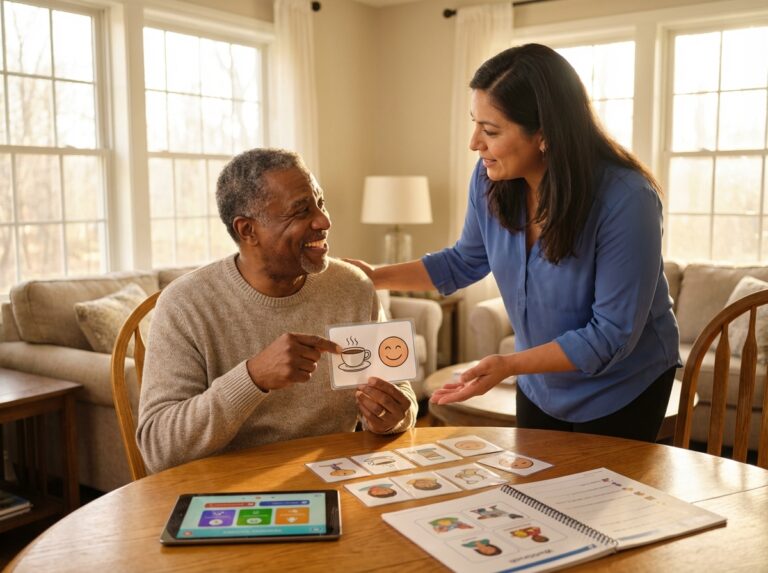
Select twenty photos of daily items (e.g., a toothbrush, a mug). For severe aphasia, the partner says the name, and the survivor repeats it. For moderate cases, the partner provides the first sound. For mild cases, the survivor attempts to name the item independently. If stuck, the partner provides a sentence with a blank at the end. Aim for fifty naming trials daily to help rebuild word-finding pathways. Read more in this guide on Neuroplasticity After Stroke: How the Brain Rewires Itself.
Semantic Feature Analysis
Pick an object and describe its features: use, location, and appearance. This creates a web of information around the word, making it easier to retrieve. Aim for ten sessions to observe changes in naming accuracy.
Script Training for Daily Life
Personalized Phrases
Choose three high-utility phrases (e.g., “I want to go for a walk,” “I need my medicine”). Write them on a card and practice saying them fifteen times each, three times a day. For severe aphasia, focus on single words; for mild cases, use longer sentences. Repetition automates speech movements for faster communication.
Sentence Completion and Building
Automatic Fill-ins
The partner starts a common phrase (“The grass is…”) and the survivor finishes it (“green”). Use twenty phrases per session, three times daily. This engages automatic speech regions, building confidence for harder tasks. To challenge, use a single word and build a three-word sentence around it.
Reading and Writing at Home
Shared Reading
Select a short news item or recipe. Read one sentence aloud, then have the survivor read the same sentence. For severe cases, focus on single words like “Stop” or “Go.” For mild cases, read a paragraph and discuss it. Dedicate fifteen minutes daily to improve fluency.
Writing to Communicate
Practice copying ten words daily, such as family names or grocery items. Use a tablet or computer if typing is easier. Start with letters, move to words, and eventually try short text messages. This engages different neural circuits than speaking.
Melodic Intonation and Singing
Singing Phrases
The right brain hemisphere, which processes music, often remains intact after a left-hemisphere stroke. Hum a simple phrase like “I love you,” then sing the words while tapping the survivor’s hand. This rhythm helps bypass damaged speech areas. Practice for ten minutes twice a day; this is effective for those struggling with single words.
Automatic Sequences and Counting
Number and Letter Drills
Practice counting to ten, reciting days of the week, or months of the year. These deeply ingrained patterns serve as excellent warm-ups. Perform these for five minutes, four times a day.
Conversation Scaffolding
Supported Conversation
Partners should use tools to facilitate speech. Offer two choices (“Tea or water?”) rather than open questions. Use pen and paper to draw the topic. Allow the survivor five seconds to respond before assisting to reduce frustration and maintain engagement.
Practice Schedule and Safety
| Activity | Daily Frequency | Session Duration |
|---|---|---|
| Naming Drills | 3 times | 15 minutes |
| Script Practice | 3 times | 10 minutes |
| Reading Aloud | 1 time | 15 minutes |
| Automatic Sequences | 4 times | 5 minutes |
Managing Fatigue
Brain recovery is demanding. If the survivor makes frequent mistakes or the error rate exceeds thirty percent, stop. Rest for ten minutes every hour. Monitor blood pressure if headaches occur. Keep activities engaging by using personal photos or music.
Supporting Memory, Social Connection, and Daily Life
Neuroplasticity allows the brain to form new connections to bypass damaged areas even years post-stroke. When practicing memory or communication, we utilize use-dependent plasticity: the more a function is used, the stronger the circuits become. More details are available in this guide on Neuroplasticity After Stroke. While the first three months are the “golden period,” rewiring remains possible in the chronic phase through intensive practice.
Spaced Retrieval Training
This memory tool relies on expanding intervals. Ask the person to recall information (e.g., a name) at increasing time gaps: one minute, two minutes, four minutes, then eight. This doubling of time helps consolidate information. Studies show this method can significantly improve retention compared to massed memorization.
Errorless Learning
The goal of errorless learning is to prevent mistakes during the learning process. If a person struggles to find a word, provide the answer immediately to prevent the brain from reinforcing the wrong pathway or a frustrated guess. Ensuring every repetition is correct makes rewiring more efficient, showing better memory retention outcomes than trial-and-error methods.
External Memory Aids
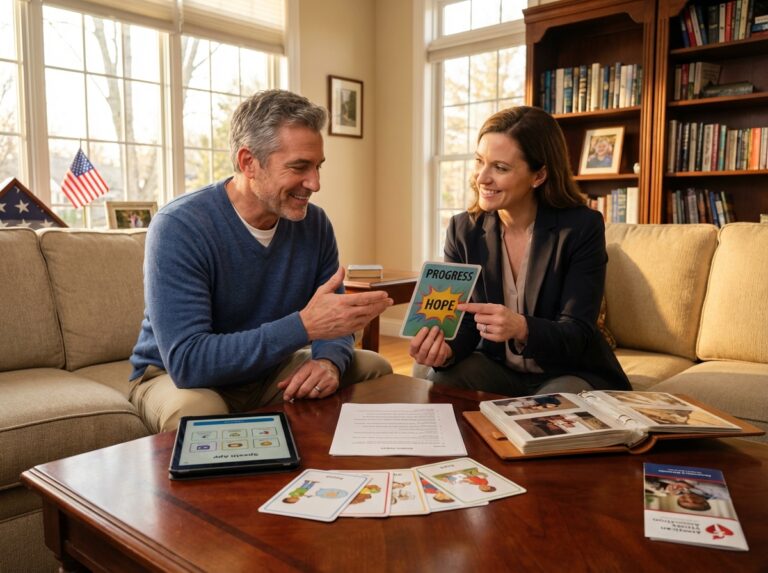
External tools reduce cognitive load. Labeled photo books help identify faces, while smartphone reminders manage medications and appointments. Environmental labeling (stickers on the microwave or doors) embeds naming practice into daily routines. Picture schedules and checklists also boost independence.
Communication Partner Training
Caregivers can use Supported Conversation for Aphasia. Verify understanding with yes/no checks (thumbs up/down). Offer clear choices instead of open questions. Crucially, wait at least five seconds for a response. This pacing reduces frustration and allows the brain to focus on connection.
Social Participation and Mental Health
Isolation is a risk. Virtual conversation groups (popular in 2025) provide safe spaces to practice. Monitor for post-stroke depression, which affects approximately 30 percent of survivors. Screening tools like the PHQ-9 can help track mental health. Managing anxiety is vital for Interventions for Neural Plasticity, as stress impairs learning.
Fatigue and Secondary Prevention
Fatigue management is essential. Plan ten-minute rests every hour. Short naps (20–30 minutes) can boost endurance and processing. If errors increase, rest. Prevent recurrence by monitoring blood pressure; if it exceeds 140/90 mmHg, pause practice. Coordinate with doctors to ensure physical health supports rehabilitation.
Common Questions People Ask
How much practice do I need and how often should I do it?
High intensity is required to trigger neuroplasticity. Aim for 300 to 600 repetitions per day, totaling two to three hours. Break this into micro-sessions of 15 to 20 minutes to manage fatigue. Spaced practice is significantly more effective for memory than massed practice.
Action steps. Set a timer for three 20-minute sessions today. Use a tally counter to track repetitions of a specific word or gesture.
Will aphasia fully resolve and what factors predict improvement?
Full recovery occurs in a minority of cases, but many achieve functional recovery with minor impairments. Factors like younger age, smaller lesion size, and higher education support rewiring. However, the brain remains capable of neuroplasticity after stroke even in the chronic phase.
Action steps. Focus on functional gains. Keep a weekly log to note when specific tasks, like ordering coffee, become easier.
| Recovery Phase | Timeline | Plasticity Characteristics |
|---|---|---|
| Acute | 0 to 72 hours | Initial rewiring plus edema resolution |
| Subacute | 2 weeks to 6 months | Peak window for rapid speech gains |
| Chronic | Beyond 6 months | Ongoing plasticity through high intensity |
What activities give the best return on time?
Specific, personally relevant activities offer the highest return. Naming therapy for daily items improves accuracy more than general conversation. Script training for specific scenarios (grocery store, phone calls) generalizes well. Multimodal practice (gestures/writing with speech) can boost recall significantly.
Action steps. Choose five high-priority words. Practice these using the recovery rates principles of repetition and salience.
Can technology and apps help and how to choose them safely?
Technology increases repetition volume. Apps like Constant Therapy provide structured, adaptive tasks. Newer treatments, such as Vagus Nerve Stimulation, show promise in clinical trials. Choose evidence-based apps with aphasia-friendly interfaces (clear icons, minimal text) that allow data sharing with therapists.
Action steps. Download a highly rated speech therapy app. Use the free trial to assess difficulty before committing.
How can caregivers avoid doing too much for the person?
Finishing sentences can reduce independence. Use Supported Conversation techniques: wait five seconds before cueing and offer choices rather than open-ended questions. This keeps the survivor in charge of communication.
Action steps. Practice the five-second rule during dinner. Count to five silently before speaking for your loved one.
When should we see or re-evaluate with a speech-language pathologist?
Schedule a re-evaluation every three to six months. If progress stalls (plateau) for several weeks, a professional can adjust goals and introduce strategies like Semantic Feature Analysis.
Action steps. Check your last therapy report. If it has been more than 90 days, call for a follow-up.
Are there safety or medical issues to watch for during home practice?
Fatigue and post-stroke depression are common hurdles. Monitor blood pressure (stop if >140/90 mmHg) and watch for sudden headaches or confusion.
Action steps. Schedule a 20-minute nap after morning practice. Use a mood tracker to monitor motivation and energy.
How do I know if the practice is actually working?
Progress is often incremental. Look for decreased time to find words or increased sentence length over months rather than days. Using stroke technology to track accuracy provides objective proof of rewiring.
Action steps. Record a video describing a picture once a month. Compare videos to observe improvements in fluency.
Final Takeaways and Practical Next Steps
Recovery is a long road built on connection and persistence. While the “golden period” of the first three months offers the fastest gains, research confirms that intensive therapy continues to trigger neuroplasticity well into the chronic phase. The key lies in consistent, high-intensity practice—aiming for hundreds of repetitions daily—and ensuring those activities are personally meaningful. By utilizing the strategies of salience, multimodal communication, and spaced repetition, you can maximize the brain’s natural ability to reorganize.
| Recovery Outcome Category | Percentage of Patients |
|---|---|
| Almost complete recovery | 10% |
| Recovery with minor impairments | 25% |
| Moderate to severe impairments | 40% |
| Requirement for long-term care | 10% |
| Initial mortality rate | 15% |
As the data above indicates, many people live with ongoing challenges. You can read more about these statistics and Full Recovery Rates & How to Improve to set realistic expectations. The goal is steady progress rather than a sudden cure. Small wins add up over weeks and months.
Set one SMART goal
Choose a goal that is specific and measurable. You might decide to name 20 family photos accurately within 10 minutes. Do this every day for two weeks. Tracking your hits and misses helps you see real progress.
Plan daily short sessions
Schedule five sessions a day. Keep each one to 10 minutes. This prevents exhaustion. It also keeps your brain in a state of learning throughout the day.
Choose two home activities
Pick one naming drill and one script training exercise. Naming drills help with word finding. Script training helps you master specific phrases you use often, like ordering coffee or answering the phone.
Pick an external aid
Use a simple tool to help your memory. A wall calendar or a set of labeled photos in the kitchen can reduce daily stress. These aids support your brain while it is busy rewiring.
Schedule a follow-up with an SLP
A speech-language pathologist can adjust your plan as you improve. They can also introduce you to new technology. Some people benefit from Stroke Technology In 2025 such as FDA-cleared apps or nerve stimulation devices.
Stay involved with your community. Join a support group to share your experiences. These social connections are just as important as the drills. They keep your spirits high and give you a reason to keep practicing. Your brain is capable of amazing things. Every effort you make today is a step toward a more connected tomorrow.
Sources
- Neuroplasticity After Stroke: How the Brain Rewires Itself — Understand how neuroplasticity aids stroke recovery by rewiring the brain, supporting rehabilitation and functional improvement.
- Full Recovery Rates & How to Improve – Stroke – Soundsory — Recovery outcomes vary for everyone and depend on factors like the severity of the stroke, quick medical care, and ongoing therapy.
- Stroke Technology In 2025: New Treatments Giving Patients A … — Endovascular thrombectomy can now be performed more than six hours after stroke onset, dramatically reducing the risk of severe disability.
- Brain changes in stroke patients during rehabilitation – Frontiers — Research on the neuroplasticity mechanisms involved in post-stroke recovery … (2025) Brain changes in stroke patients during rehabilitation …
- ESOC 2025 Session Report: Advanced Technologies in Stroke … — While high-intensity, high-activity therapy is known to promote neuroplasticity, many current tech options fall short as devices track …
- Interventions for Neural Plasticity in Stroke Recovery – PMC — Stroke is a leading cause of long-term disability, and enhancing neural plasticity is a central strategy in promoting functional recovery.
- Inside the quest to understand how the brain rewires itself after stroke — Humans experience the most brain plasticity before they reach adulthood, but after a brain injury like a stroke, there's a window of plasticity …
Legal Disclaimers & Brand Notices
The content provided in this article is for informational purposes only and does not constitute professional medical advice, diagnosis, or treatment. Always seek the advice of your physician or other qualified health provider with any questions you may have regarding a medical condition, stroke recovery, or treatment plan. Never disregard professional medical advice or delay in seeking it because of something you have read in this article.
All product names, logos, and brands mentioned in this text are the property of their respective owners. All company, product, and service names used in this article are for identification purposes only. Use of these names, trademarks, and brands does not imply endorsement or affiliation.