Apraxia and aphasia are different speech and language disorders that often follow stroke or brain injury, yet they are commonly confused. This article explains how to tell them apart, when to seek professional assessment, and practical, evidence-informed home practice ideas to support communication, memory, and social connection after aphasia. It’s written for caregivers and people living with aphasia in the U.S. context.
How apraxia and aphasia differ in causes and symptoms
Communication struggles after a brain injury can feel like a wall between a person and the world. When a loved one suddenly cannot speak well, it is natural to assume they have lost their language. However, the reason for the silence or the jumbled words can stem from two very different places in the brain. Understanding whether the issue is aphasia or apraxia of speech is the first step toward the right kind of help. These two conditions often look similar to families, but they require different tools for recovery.
The Core Difference Between Language and Motor Planning
Aphasia is a language processing disorder. It happens when the brain has trouble using the “software” of communication. The person might know exactly what they want to say, but they cannot find the right words in their internal dictionary. It can also affect how they understand what others say. This is not a problem with the mouth or the throat. It is a problem with the brain’s ability to handle symbols and meanings. You can find more details on this in the Aphasia – ASHA portal.
Apraxia of speech is a motor planning disorder. In this case, the “software” for language might be working fine. The person knows the word they want. Their muscles are strong enough to move. The problem lies in the “wiring” that sends signals from the brain to the lips, tongue, and jaw. The brain struggles to program the sequence of movements needed to make sounds. It is like a conductor who knows the music but cannot get the orchestra to follow the beat. This distinction is vital for choosing the right therapy, as noted in the Apraxia vs Aphasia, the Complete Guide 2025 – Constant Therapy.
Common Causes and Brain Locations
The most frequent cause for both conditions is a stroke. About 25 to 50 percent of all strokes result in some form of aphasia. Ischemic strokes, which involve a blockage, or hemorrhagic strokes, which involve bleeding, can damage the left hemisphere of the brain. This side of the brain typically handles language for most people. Traumatic brain injuries from accidents or falls are another common cause. Progressive neurological diseases can also lead to these disorders over time.
The location of the brain injury often dictates the symptoms. Damage to Broca’s area in the frontal lobe often leads to nonfluent speech and apraxia. This area is responsible for turning thoughts into spoken words. Damage to Wernicke’s area in the temporal lobe usually causes fluent but nonsensical speech. When the injury is large, it can affect multiple areas at once. This leads to a combination of both language and motor planning issues.
Recognizing Apraxia of Speech
Apraxia has very specific signs that set it apart. One of the most common behaviors is “groping.” You might see a person’s lips or tongue moving around as if they are searching for the right spot to start a sound. Their errors are often inconsistent. They might say a word correctly once and then struggle with it seconds later.
Automatic vs. Novel Speech
A person with apraxia might say “How are you?” perfectly because it is an automatic, “pre-programmed” phrase. But if you ask them to say a new or complex word like “aluminum,” they may struggle significantly. They often distort vowel sounds or leave out parts of consonant clusters. The rhythm of their speech might feel robotic or choppy because they are working so hard to place each sound.
Recognizing Aphasia Patterns
Aphasia looks more like a struggle with the words themselves rather than the physical act of speaking. Word-finding problems, or anomia, are universal in all types of aphasia. A person might call a “pen” a “thing you write with” or a “pencil.” This is called circumlocution.
In nonfluent aphasia, the person speaks in very short phrases. They might leave out words like “the” or “is.” In fluent aphasia, the person might speak at a normal speed, but the words they choose do not make sense. They might even create new, made-up words. Comprehension is another key factor. If a person has trouble following simple directions, it is likely a sign of aphasia rather than just apraxia.
When the Disorders Overlap
It is very common for a person to have both aphasia and apraxia. Estimates suggest that 40 to 60 percent of people who have a stroke in the left hemisphere experience both. This makes diagnosis more complex for a speech-language pathologist. If a person cannot find the word (aphasia) and cannot move their mouth to say it (apraxia), the frustration levels can be very high.
Other conditions often appear alongside these disorders. Dysarthria is a common comorbidity where the muscles of the face or throat are actually weak or paralyzed. This is different from apraxia, which is about planning, not strength. Some people also experience limb apraxia. This makes it hard to perform purposeful movements with the hands, like waving or using a spoon, even though the muscles are strong.
Comparison of Key Signs
| Feature | Apraxia of Speech | Aphasia |
|---|---|---|
| Primary Issue | Motor planning and coordination | Language processing and meaning |
| Speech Errors | Inconsistent sounds and distortions | Wrong words or made-up words |
| Groping | Commonly seen as mouth searching | Rarely seen |
| Automatic Phrases | Often clear and easy to say | May still be difficult or incorrect |
| Comprehension | Usually stays intact | Often impaired to some degree |
| Written Language | Often unaffected by the motor issue | Usually shows the same errors as speech |
Next Steps for Families
If you suspect your loved one is struggling with these issues, you can start gathering information before the professional evaluation. Use your phone to record short speech samples of about one minute. Note the specific contexts where they struggle. Do they do better when they are relaxed? Do they struggle more with new names than with common greetings?
Write down examples of their errors. Note if they seem to understand your questions even when they cannot answer. This data will be incredibly helpful for a speech-language pathologist. It helps them determine where the “breakdown” is happening. Knowing the difference between a language gap and a motor planning gap changes the entire approach to home practice and recovery.
Getting a clear assessment and personalized goals
Getting a professional assessment is the first step toward building a life after a stroke or brain injury. In the United States, this process usually begins with a licensed speech-language pathologist. These professionals work in many settings. You will find them in acute care hospitals, inpatient rehabilitation centers, and outpatient clinics. Many people now use teletherapy to work with experts from home. If a stroke just happened, the hospital should provide an evaluation within 24 to 48 hours. If you are already home, you can ask a primary care doctor or a neurologist for a referral to an outpatient SLP.
Professional Assessment Tools and Methods
The Western Aphasia Battery
SLPs often use the Western Aphasia Battery to determine the type and severity of aphasia. This tool looks at how well a person speaks, understands, reads, and writes. It helps the therapist see if the person has trouble with fluency or repetition. This is a standard way to track progress over several months.
The Boston Naming Test
This test focuses on word retrieval. The person looks at drawings and tries to name them. It helps the SLP understand the specific nature of naming errors. Some people might know the word but cannot get the sounds out. Others might not be able to find the word at all. This distinction is vital for planning the right exercises.
Apraxia of Speech Rating Scale
When motor planning is a concern, the SLP uses this scale. It measures things like speech sound distortions and the effort it takes to move the mouth. It helps separate apraxia from other issues like muscle weakness. You can read more about these distinctions in this guide on Apraxia vs Aphasia.
Connected Speech Samples
The therapist will also record the person talking about a familiar topic or describing a picture. This shows how speech sounds in the real world. It captures things that formal tests might miss, such as natural rhythm and the use of automatic phrases like “hello” or “thank you.”
The Interdisciplinary Team
Speech therapy works best when it is part of a larger plan. A neurologist manages the medical health of the brain. A physiatrist often oversees the entire rehabilitation process. Occupational therapists are important because they help with daily tasks that require communication. Neuropsychologists look at memory and mood. These factors shape how a person responds to speech therapy. If someone is dealing with depression or high levels of fatigue, the SLP will adjust the intensity of the sessions. This team approach ensures that every part of the recovery is supported.
Setting SMART Goals for Recovery
Goals should be functional and meaningful for daily life. SLPs use the SMART principle to create these plans. This means goals are specific, measurable, achievable, relevant, and time-bound. A goal to “speak better” is too vague. A SMART goal would be “the person will name ten common kitchen items with 80 percent accuracy to help with meal preparation.”
Other examples of functional goals include producing a scripted phone call to a pharmacy or using a pacing board to improve clarity during family dinners. These targets give the person and the caregiver a clear way to see improvement. They focus on connection rather than just passing a test. You can find more information on these standards through Aphasia – ASHA.
Navigating Insurance and Access
In the United States, Medicare and private insurance usually cover speech therapy if it is medically necessary. Outpatient plans often allow for 20 to 36 sessions per year. If more sessions are needed, the SLP can help file an appeal. They do this by documenting functional progress and showing why more help is required. You should ensure your SLP provides detailed notes on this progress to justify continued coverage. Request a copy of your latest progress report to keep in your personal medical files for insurance appeals.
To find a provider, you can use the ASHA ProFind tool. It lists thousands of certified SLPs by zip code. If transportation is an issue, Medicare Part B has expanded coverage for teletherapy since 2020. This allows for high-quality care from a living room.
Tracking Progress at Home
Documenting the baseline performance is essential. You should record a one-minute video of the person speaking during the first week of therapy. This provides a visual record of where the journey started. You can use simple tools to track growth between appointments.
- Keep a daily communication log to note successful interactions.
- Track the percentage of words understood by family members during a specific task.
- Maintain a list of words the person can now say without help.
- Record a new video every month to compare with the baseline.
Advocating for the Best Care
Caregivers play a huge role in the assessment process. It is important to bring a list of questions to the evaluation. You should ask the SLP how the diagnosis affects daily safety. Ask for a specific home practice plan that fits into your schedule. You can also ask for a copy of the evaluation report. If you feel the person is not making progress, ask the therapist to review the goals. Sometimes a small change in the approach can make a big difference. For more help with these conversations, visit the American Stroke Association website. They offer resources for families navigating these challenges.
Practical home practice ideas to support communication memory and connection
Word Retrieval and Naming Strategies
Finding the right word is the most common struggle for people with aphasia. This difficulty is known as anomia. You can use Semantic Feature Analysis to rebuild these neural pathways. This method involves describing a target word in detail. If the person cannot say the word apple, they should describe its features. They might say it is a fruit. It is red. It grows on trees. You eat it. This process helps the brain find the word by surrounding it with related information. Try this for ten minutes every morning with common household items.
Home Object Scavenger Hunt
Ask the person to find specific items around the house. You can say find the thing we use to brush teeth. This combines comprehension with word retrieval. If they struggle, use a cueing hierarchy. Start with a broad hint. It is in the bathroom. Then give a phonemic cue. It starts with the letter T. Finally, provide the first sound. This graduated support prevents frustration. Aim for twenty items per session. Repeat this three times a week to build consistency.
Sentence Production and Functional Scripting
Moving from single words to full sentences requires structured practice. Script training focuses on specific situations the person encounters daily. Common scripts include ordering coffee, calling the pharmacy, or greeting a neighbor. Write these scripts on index cards. Practice the lines repeatedly. Start with the person reading the text aloud. Gradually hide words until they can say the phrase from memory. This builds functional independence.
Varied Prosody Practice
Once a script is learned, practice it with different emotions. Say the phrase while sounding happy. Say it while sounding tired. This helps with the rhythm of speech. It is especially helpful for those with mixed presentations. Use a pacing board or tap the table for each syllable. This keeps the speech rate steady. Practice one script for fifteen minutes daily until it feels natural. Move to a new scenario every two weeks.
Comprehension and Memory Support
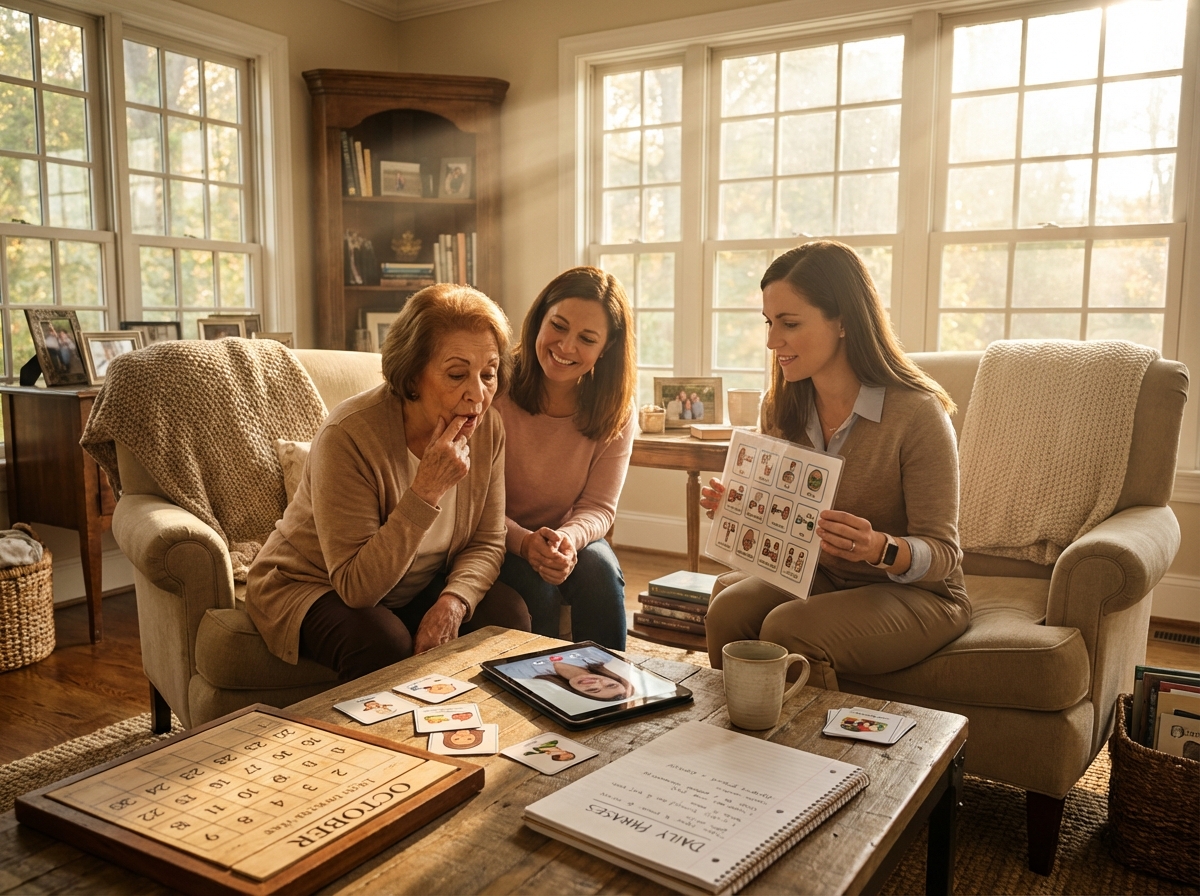
Language involves understanding as much as speaking. Short story reading is an effective way to practice. Read a paragraph together. Ask simple questions about the characters or the action. Use multiple choice options if the person cannot find the words to answer. This reduces the cognitive load. Memory can be supported by using a large wall calendar. Label every appointment and event. This creates a visual anchor for daily life.
Chunking and Rehearsal
Memory for instructions can be improved through chunking. Instead of giving a long sentence, break it into small pieces. Pick up the mail. Put it on the table. Get your glasses. Ask the person to repeat each piece back to you. Use labeled photos of family members to practice names. This connects visual memory with language. Spend ten minutes a day reviewing these photos. It strengthens the connection between the person and their social circle.
Motor Planning for Apraxia
Apraxia of speech is a motor planning issue. The brain knows the word but cannot coordinate the muscles to say it. Practice must be highly repetitive. Use visible articulatory practice. Sit in front of a mirror together. The person should watch your mouth as you make sounds. Focus on simple syllable drills. Use functional words like cup or home. Start with the sound B. Move to Ba. Then move to Ball. This is called integral stimulation.
Multisensory Cueing
Pair speech with physical movement. Tap a finger for every sound. Use hand gestures to represent the shape of the mouth. For the sound P, you might mimic a small explosion with your hand. This gives the brain an extra signal to follow. Pacing strategies are vital here. Use a metronome app set to a slow beat. Say one syllable per beat. This reduces the groping behaviors common in apraxia. Consistency is more important than speed. Aim for fifty repetitions of a target sound in each session.
Conversation Practice and Social Connection
Social isolation is a major risk after a stroke. Supported conversation techniques allow the person to participate even with limited speech. Use yes or no questions. Offer written choices on a piece of paper. If you are discussing dinner, write down chicken, pasta, and fish. Let the person point to their choice. This keeps them in the driver seat of their own life. It maintains the human connection that is often lost in clinical settings.
Communication Partner Training
Family members should learn to be communication ramps. Do not finish the person’s sentences immediately. Wait ten seconds before offering help. Use a conversation diary to track successful interactions. Note what worked well. Maybe using a gesture helped. Maybe drawing a picture was the key. Review this diary weekly to see progress. This shifts the focus from what is missing to what is possible. It builds confidence for both the speaker and the listener.
Tools and Technology for Home Use
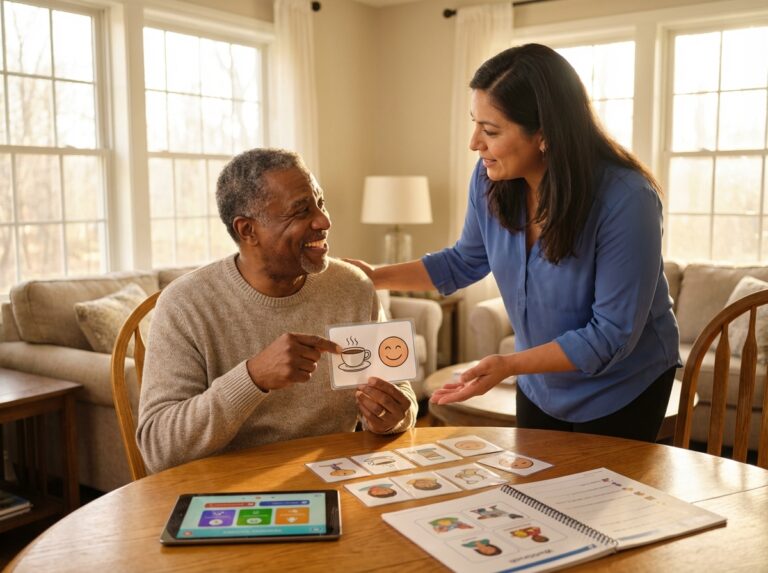
Low tech aids are often the most reliable. Create a picture board with common needs. Include icons for water, bathroom, pain, or rest. Label cabinets and drawers with the names of the items inside. This provides a constant language cue throughout the day. Use written choice cards for daily decisions. These simple tools reduce the daily stress of communication. They are inexpensive and easy to make with markers and paper.
High Tech Options in 2025
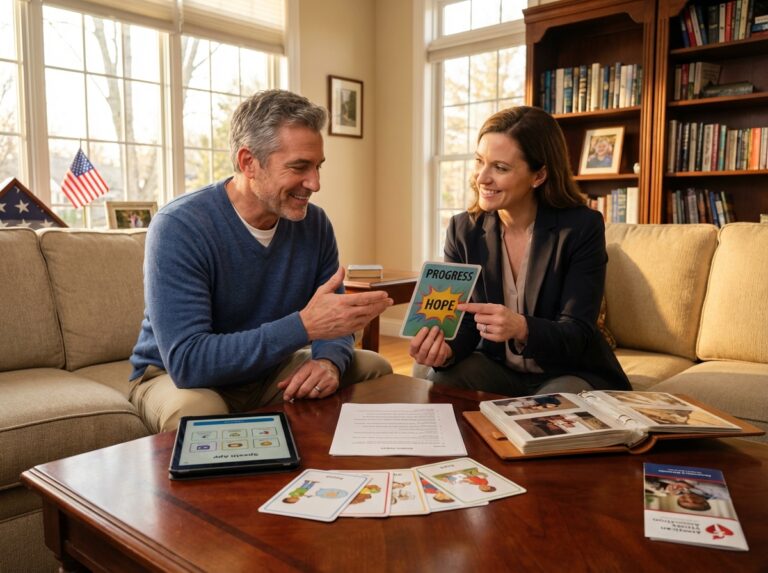
Many apps now support home recovery. Apraxia vs Aphasia, the Complete Guide 2025 – Constant Therapy provides evidence based exercises that adapt to the user’s level. These tools track progress and send data to your speech therapist. Use the recording feature on a smartphone. Let the person listen to their own speech. This helps with self monitoring. Video chats are also great for practice. They provide visual cues that a standard phone call lacks. Ensure the person has a quiet space for these digital sessions.
Safety and Independence at Home
Living alone is possible if you have a solid safety plan that does not rely solely on verbal speech. Program emergency scripts into a dedicated device and set up daily check-ins with a family member or neighbor. Use medical alert systems that feature a simple button press to call for help in case of an emergency. These tools provide a safety net while allowing for personal independence. Practice an “emergency script” five times a day until you can produce it reliably under stress.
Sample Weekly Practice Plan
Structure helps manage the fatigue that comes with brain injury. A consistent routine makes practice a habit rather than a chore.
| Day | Morning Session (20 Min) | Afternoon Session (20 Min) |
|---|---|---|
| Monday | Word Naming (SFA) | Script Practice (Greeting) |
| Tuesday | Syllable Drills (Apraxia) | Picture Description |
| Wednesday | Scavenger Hunt | Short Story Reading |
| Thursday | Script Practice (Phone) | Memory Photo Review |
| Friday | Syllable Drills (Apraxia) | Conversation Diary |
Include one community focused activity each week. This could be a short phone call to a relative or a visit to a local shop. Use the learned scripts during these outings. This bridges the gap between home practice and the real world.
Fatigue Management and Measurement
Cognitive fatigue is a physical reality after a brain injury. Watch for signs of struggle. Increased errors are a primary indicator. If the person starts making mistakes on words they knew ten minutes ago, they are tired. Frustration and rubbing the eyes are also signs. Schedule practice for the best time of day. For many, this is the morning after breakfast. Keep sessions short. Twenty minutes of focused work is better than an hour of exhausted struggle.
Tracking Improvements
Note small wins to stay motivated. Track the number of words named correctly without help. Measure intelligibility by noting how many times a family member understood a sentence on the first try. If accuracy reaches eighty percent, it is time to make the task harder. If it falls below fifty percent, make it easier. This ensures the person is always working at the right level. Celebrate these gains. Recovery is a long process. Recognizing progress keeps the momentum going. For more information on language disorders, visit the Aphasia – ASHA resource page.
Final takeaways and next steps for living well after aphasia
Understanding the line between apraxia and aphasia is the first step toward a better recovery. Getting an accurate diagnosis from a speech-language pathologist (SLP) is vital. If you treat a language problem with motor exercises, you will not see the progress you want. The opposite is also true. Effective therapy must target the specific breakdown in the communication chain.
Top Three Immediate Actions
If you or a loved one are navigating these challenges, start with these three steps. First, schedule a comprehensive assessment with a certified SLP. You can find one through the Aphasia – ASHA portal. A professional evaluation uses tools like the Western Aphasia Battery to pinpoint exactly where the communication breakdown occurs. Second, establish a simple daily home practice. Aim for fifteen to twenty minutes of focused work. Consistency matters more than the length of the session. Third, set one functional communication goal. This should be something useful in daily life. It might be successfully ordering a coffee or calling a family member to say hello. Having a specific target makes the work feel relevant and rewarding.
Building a Sustainable Home Routine
Recovery is a long process. It often takes one to two years to see significant functional gains. A sustainable routine prevents burnout for both the person with aphasia and the caregiver. Try to practice at times when energy levels are highest. Fatigue is a major factor in communication success. If you notice an increase in errors or high levels of frustration, it is time to take a break. Many families find success using evidence-based tools like the Constant Therapy app. These tools track progress and adjust difficulty levels automatically. You should update your goals with an SLP every three months. This ensures the practice remains challenging but achievable. Tracking small wins is important. If you can understand 10% more of what your partner says this week, celebrate that victory.
Emotional Support and Connection
The emotional impact of communication loss is heavy. Data shows that 30% to 50% of people with aphasia experience depression. Social isolation can make the physical symptoms feel worse. It is important to seek mental health support if feelings of sadness or withdrawal persist for more than a few months. Connection is just as important as speech drills. Joining a support group can reduce feelings of isolation by 25%. These groups provide a safe space to practice communication without the fear of judgment. Caregivers also need support. Learning techniques like Supported Conversation for Aphasia can help partners communicate more effectively. This reduces the burden on the person who is struggling to speak.
Resources and Next Steps
There are many organizations dedicated to helping families navigate life after a stroke. Use these resources to find local help and educational materials.
- ASHA ProFind. This tool helps you locate certified speech-language pathologists by zip code across the United States.
- American Stroke Association. They offer local chapters and support groups for survivors and caregivers. You can find more information at Aphasia vs Apraxia | American Stroke Association.
- National Aphasia Association. This group provides a wealth of resources, including webinars and a directory of aphasia centers.
- Teletherapy Directories. Many insurance plans, including Medicare Part B, now cover speech therapy via video calls. This is a great option if transportation is a barrier.
A Path Forward with Hope
Living well after aphasia or apraxia requires patience and teamwork. Progress may feel slow at times. There will be days when the words just do not come. This is a normal part of the recovery journey. Focus on the progress made since the first week after the injury rather than comparing today to life before the stroke. Use every tool available. This includes high-tech apps and low-tech picture boards. Every successful interaction builds confidence. Stay consistent with your home practice. Keep your social circles active. Most importantly, remember that communication is about connection. Even when the words are not perfect, the connection remains possible. Work closely with your healthcare team. Set realistic expectations. Celebrate every step forward.
Sources
- Apraxia vs. aphasia: What's the difference? — Both apraxia of speech and aphasia affect an individual's ability to communicate – they just do so in different ways. Apraxia makes it hard to coordinate …
- Aphasia – ASHA — Aphasia is an acquired neurogenic language disorder resulting from brain injury. Aphasia may affect receptive and expressive language.
- Apraxia vs Aphasia, the Complete Guide 2025 – Constant Therapy — Aphasia affects your ability to understand and produce speech, while apraxia affects the planning and coordination of speech movements. Apraxia occurs when …
- Incidence of Primary Progressive Apraxia of Speech … – Neurology.org — We aimed to assess the incidence of these disorders in our population-based cohort study in Olmsted County, MN, from 2011 to 2022.
- Apraxia – StatPearls – NCBI Bookshelf — Apraxia is prevalent in approximately 50% to 80% of individuals with left hemisphere strokes, 30% to 50% with right hemisphere strokes, 19% to …
- Recovery of language skills compared with recovery of gestures for … — Apraxia is an acquired cortical level motor disorder with difficulties in intentionally producing bodily actions, which cannot be explained by aphasia or …
- 5 Things to Know about Aphasia and Apraxia — 1. You can have aphasia with or without apraxia, but if you have apraxia, you also have aphasia. Both are caused by brain damage from a stroke or brain injury.
- Aphasia vs Apraxia | American Stroke Association — Aphasia, apraxia of speech and oral apraxia are communication disorders that can result from a stroke. At times, it's hard to distinguish between them.
- Apraxia of Speech in Adults: Signs, Causes & Treatment — Apraxia of speech in adults is difficulty speaking caused by damage to the brain pathways that control speech.
Legal Disclaimers & Brand Notices
The information provided in this article is for informational and educational purposes only and does not constitute professional medical advice, diagnosis, or treatment. Always seek the advice of a physician, speech-language pathologist, or other qualified health provider with any questions you may have regarding a medical condition, stroke recovery, or therapeutic interventions.
All product names, logos, and brands mentioned in this text are the property of their respective owners. All company, product, and service names used in this article are for identification purposes only. Use of these names, logos, and brands does not imply endorsement.