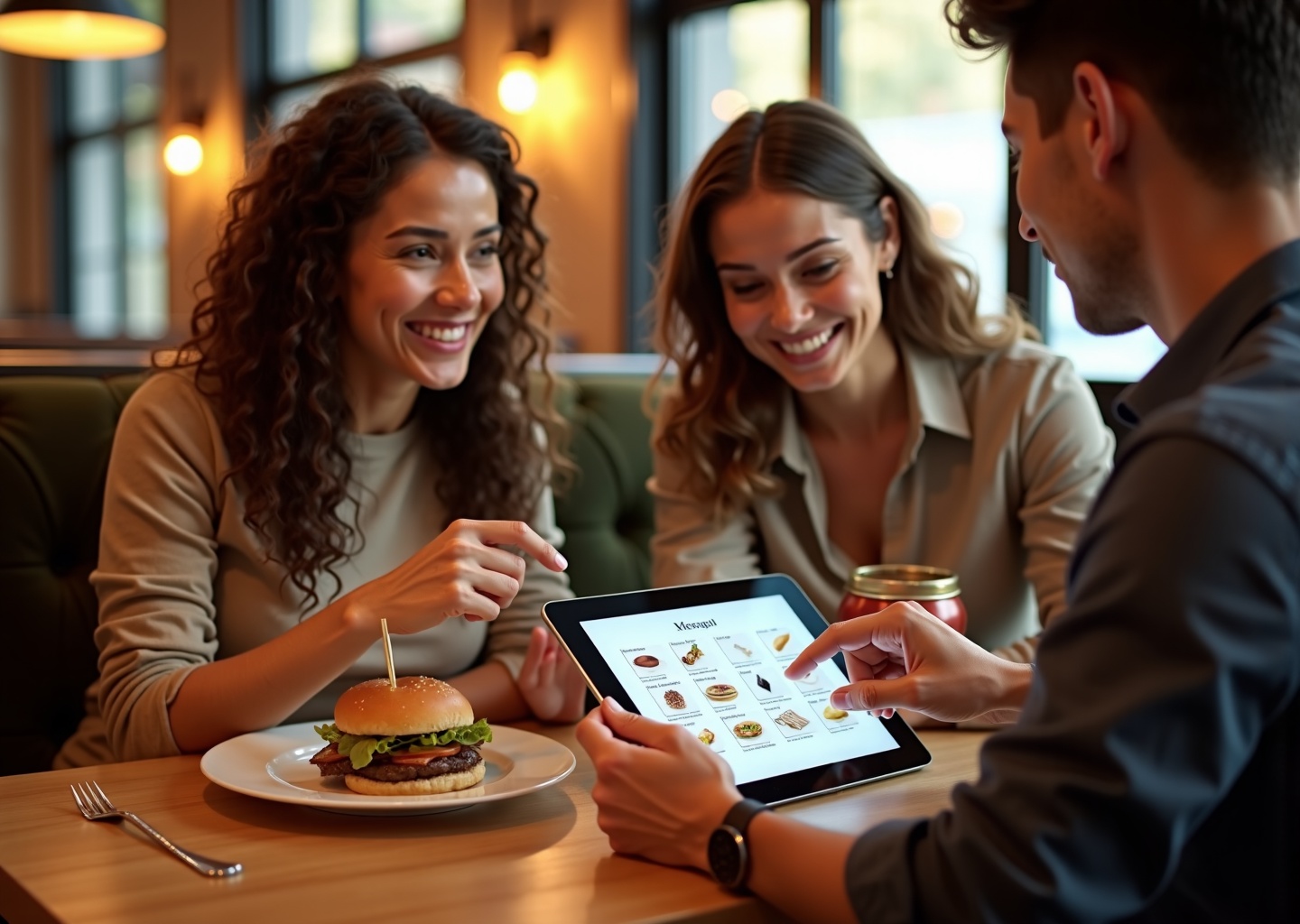
Ordering at a restaurant can be stressful after aphasia, but with simple planning and daily practice people can regain confidence and independence. This guide shows practical communication strategies, home practice activities, and community tips to prepare for dining out after stroke or brain injury. Use these evidence-based techniques to support speech, reduce anxiety, and maintain social connection and rebuild routines.
Preparing to Dine Out Practical planning and communication strategies
A successful meal out starts long before you walk through the restaurant door. A little preparation can transform a potentially stressful experience into an enjoyable one. By planning ahead, you reduce the on-the-spot pressure to find words, make quick decisions, and navigate a busy environment. This preparation empowers you, giving you the tools and confidence to communicate your choices effectively.
Look at the Menu Before You Go
Most restaurants post their menus online. Taking ten or fifteen minutes to review it at home is one of the most powerful things you can do. This gives you time to process the options without the pressure of a server waiting.
- Find the menu. Search online for the restaurant’s name and “menu.”
- Read at your own pace. Take your time. Look at pictures if they are available. Use a reading guide or app if that helps.
- Choose several options. Pick two or three dishes you would be happy to eat. This way, if your first choice isn’t available, you have a backup ready. You won’t have to scramble to find a new option.
- Practice the names. Say the names of your chosen dishes out loud. Write them down. The goal isn’t perfection, but familiarity. Just having the word in your mind can make it easier to access later.
Call the Restaurant in Advance
A quick phone call can make a world of difference. You can make requests that set you up for success. If speaking on the phone is difficult, ask a family member or friend to make the call for you.
What to ask for:
You can request a quiet table, perhaps in a corner or away from the kitchen and entrance. This reduces background noise, which can make communication much harder. You can also briefly explain your needs. Most staff want to be helpful and will appreciate the heads-up. In some cases, you might even be able to pre-order your meal, completely removing the task of ordering at the table.
Sample Phone Script
"Hello, I'd like to make a reservation for two people tonight at 6:30 PM under the name [Your Name].

One of the diners has aphasia, which can make speaking difficult. Could we please request a quiet table, maybe in a corner? This will help us communicate more easily. Thank you so much for your help."
Create a Communication Card
A small, laminated card can be your best friend at a restaurant. It speaks for you when you can’t, providing key information to the staff quickly and discreetly. It reduces frustration for everyone and helps the server understand how to best help you. Keep it in your wallet or purse so it’s always ready.
Communication Card Template
Hello, my name is [Your Name].

I have aphasia, which affects my ability to speak. I understand everything you are saying.

Please be patient. To help me communicate, you can:
- Ask yes/no questions.
- Let me point to the menu.
- Give me time to write or use my tablet.

Allergies: [List any allergies here, e.g., "Severe peanut allergy"]

Thank you for your understanding!
For a simpler version, you can create a card with just a few key lines: “Hello, I have aphasia. I have trouble speaking, but I understand you. Please be patient. Thank you.” Laminating a physical card makes it durable for repeated use.
Prepare Your Dining Partner
Your dining companion is your teammate. Before you go, have a conversation about how they can best support you. This isn’t about them ordering for you, unless that’s what you want. It’s about them helping you communicate for yourself.
Tips for your partner:
- Be patient. Remind them to give you plenty of time to respond. They should resist the urge to jump in and finish your sentences.
- Speak slowly and clearly. Use simple sentences.
- Ask yes/no questions. Instead of “What do you want to drink?” try “Do you want water?” or “Do you want iced tea?”
- Offer choices. If you are having trouble, they can ask, “Do you want the chicken or the fish?” while pointing to the items on the menu.
- Confirm the order. They can help by repeating the order back to the server to ensure it’s correct.
Know Your Rights and How to Ask for Help
Under the Americans with Disabilities Act (ADA) in the United States, restaurants are required to provide “effective communication” for people with disabilities. This means they must make reasonable efforts to understand you and be understood. This can be as simple as providing a pen and paper or taking the time to let you point to items on the menu. You don’t need to quote the law; a polite request is usually all that’s needed. For example, you can simply say, “Pen, please,” or show your communication card.
Safety First: Confirming Your Order
For anyone, but especially if you have allergies or dietary restrictions, it’s vital to know your order was understood correctly.
- Point again. After you’ve ordered, point to the item on the menu and look to the server for a nod of confirmation.
- Ask for a read-back. Your dining partner can say, “Could you please repeat that order back to us?”
- Use a dedicated allergy card. For critical safety issues, clarity is essential. Do not rely on speech alone. Create a dedicated, easy-to-read allergy card. Use bold, clear letters and hand it directly to your server, asking them to show it to the chef.
Example Allergy Card Text:
SEVERE PEANUT ALLERGY.
No peanuts, peanut oil, or cross-contamination. Please use clean utensils and a separate cooking surface.
Checklists for Success
Use these lists to help you prepare. You can print them or save them on your phone.
Before You Go Checklist
- [ ] Looked at the menu online.
- [ ] Chose 2-3 meal options.
- [ ] Practiced saying or writing my choices.
- [ ] Called the restaurant for a quiet table (optional).
- [ ] Packed my communication card/pen/tablet.
- [ ] Talked with my dining partner about how to help.
At the Restaurant Checklist
- [ ] Choose a seat with good lighting and less noise.
- [ ] Show my communication card to the server.
- [ ] Use pointing, writing, or my device to order.
- [ ] Take my time. It’s okay to pause.
- [ ] Confirm the order with the server.
Sample Ordering Dialogues
Here are a few examples of how ordering might look.
1. Independent Pointing
Server: “Hello, what can I get for you today?”
Person with Aphasia: (Opens menu, points clearly to “Classic Burger,” then points to “Fries,” and then to “Water.”) “Burger… and… water.”
Server: “Great. One Classic Burger with fries and a water. I’ll have that right out for you.”
2. Supported Choice with a Partner
Server: “Are you ready to order?”
Person with Aphasia: (Nods, looks at partner.)
Dining Partner: (To person with aphasia) “You liked the salmon and the chicken pasta. Do you want the salmon?” (Points to salmon on the menu.)
Person with Aphasia: (Shakes head no.)
Dining Partner: “Okay. Do you want the chicken pasta?” (Points to pasta.)
Person with Aphasia: (Nods yes, smiles.)
Dining Partner: (To server) “She will have the chicken pasta, please.”
3. Using a Communication Card
Server: “Welcome! Can I start you off with something to drink?”
Person with Aphasia: (Hands the server the communication card. The server reads it.)
Server: “Okay, thank you for letting me know. Take all the time you need. Are you ready for a drink?”
Person with Aphasia: (Nods, then points to “Iced Tea” on the menu.)
Server: “Iced tea. You got it. I’ll be back in a moment to see what you’d like to eat.”
Home practice activities to build ordering skills
After you’ve done the important prep work of choosing a restaurant and reviewing the menu online, the next step is to build confidence at home. Consistent, low-pressure practice can transform a stressful event into an enjoyable one. Think of it as a dress rehearsal. By practicing the specific skills needed for ordering, you build muscle memory for your words, gestures, and tools, making the real experience much smoother. Remember to work closely with your speech-language pathologist (SLP) to tailor these exercises to your specific needs and energy levels.
Role-Playing Your Order
Role-playing is one of the most effective ways to prepare. Start simple and gradually add layers of difficulty. Your practice partner can be a family member, friend, or caregiver.
- Level 1: Simple Choice. Your partner presents two pictures from the menu (e.g., a photo of a burger and a photo of a salad). They ask, “Do you want the burger or the salad?” You respond by pointing, using a single word, or giving a thumbs-up to their suggestion.
- Level 2: Menu Pointing. Your partner holds a printed copy of the menu. They ask, “What would you like for your main course?” You find the item on the menu and point to it directly.
- Level 3: Scripted Response. Your partner acts as the server and asks a question like, “What can I get for you to drink?” You use a pre-written script to respond, such as, “I would like water.”
- Level 4: Realistic Environment. Once you’re comfortable, add distractions. Turn on the TV or play music in the background to simulate the noise of a restaurant. This helps you practice focusing your attention and communication skills.
Creating and Using Picture Choice Boards
A picture board is a powerful, low-tech tool. It turns an abstract menu into concrete choices. You can create one easily at home.
How to Make a Choice Board
Use a takeout menu from the restaurant or find pictures of the food items online. Print and cut out the pictures of the items you are considering. Glue them onto a piece of cardstock, leaving space between each one. You can organize them by course (drinks, appetizers, main dishes, desserts). For durability, consider laminating the board. In the restaurant, you can simply point to the picture of what you want to order.
Rehearsing Written and Spoken Scripts
Practicing a few key phrases can make a huge difference. Keep them short and direct. Rehearse them by speaking them aloud, writing them down, or typing them into a device.
- Basic (Yes/No): Your partner points to an item and asks, “This one?” You practice responding with a clear “Yes” or “No,” a head nod/shake, or a thumbs-up/down.
- Simple Request: Practice phrases like, “I want that,” (while pointing) or simply stating the name of the item, “Cheeseburger.”
- Full Sentence Request: Work up to a full phrase, such as, “I will have the chicken sandwich.” or “Water with lemon, please.”
Memory Techniques for Your Order
Spaced Retrieval and Errorless Learning
These techniques are excellent for strengthening your memory of what you plan to order. In errorless learning, the goal is to prevent mistakes. Your partner provides the answer for you immediately. For example, they say, “You are ordering the salmon. What are you ordering?” You then repeat, “The salmon.” This builds a correct memory trace from the start.
With spaced retrieval, you practice recalling that information over increasing time intervals.
- Your partner states your order: “Your order is the grilled chicken.”
- They immediately ask, “What is your order?” You respond.
- Wait 15 seconds and they ask again.
- If you answer correctly, double the time to 30 seconds, then 1 minute, 2 minutes, and so on.
- If you forget, your partner provides the correct answer immediately (“Your order is the grilled chicken”) and you go back to the shortest time interval (15 seconds).
- Tablet and Phone Apps: Use text-to-speech apps (like a notes app with a speak function) to type your order and have the device say it. Practice typing your top two or three choices.
- Speech-Generating Devices (SGDs): If you use an SGD, work with your SLP to program buttons for your favorite restaurant foods and phrases. Practice navigating the pages to find your order quickly. The goal is to make the process feel automatic.
- Contactless Ordering Apps: Many restaurants now use QR codes for menus and ordering. Practice at home by visiting the restaurant’s website and navigating their online ordering system. This can be a great, low-stress way to dine out, as it removes the verbal pressure entirely.
- Visual Timers: Aphasia can be fatiguing. Use a visual timer on your phone to structure practice sessions. For example, set it for 15 minutes of focused practice followed by a 5-minute break.
- Confirm understanding. Repeat the order back to ensure it’s correct. “Okay, so you want the turkey club. Got it.”
- Give positive feedback. Focus on what went well. “You pointed to that on the menu really clearly!”
- Step 1: Drive-Thru or Coffee Shop. Go to a drive-thru or a quiet coffee shop during an off-peak time. The interaction is short and predictable. Order just one simple item, like a coffee or a tea.
- Step 2: Familiar Restaurant, Off-Peak. Visit a restaurant you know well when it’s not busy. Order an appetizer or a drink.
- Step 3: Full Meal. Once you feel confident, go for a full meal at a quiet, familiar spot.
- Go during off-peak hours, like 4:30 PM for an early dinner, when it’s quieter and less crowded.
- When you make a reservation, specifically request a quiet table or a booth along a wall away from the kitchen or entrance.
- Keep the first few outings short. Perhaps just go for an appetizer or dessert to start.
- Consider using noise-reducing earplugs, which can lower the background clatter without completely blocking out your dining partner’s voice.
- Pre-planning is your superpower. Before you even leave the house, you can set yourself up for success. This means choosing a restaurant that is familiar or less crowded, looking at the menu online to decide on your order in advance, and identifying a quiet time to visit. Preparation reduces the cognitive load in the moment, freeing up your mental energy for communication.
- Visual supports and scripts are your safety net. You do not have to rely on speech alone. A simple communication card that explains aphasia, a pre-written script with your order, or a picture of your desired meal on your phone can bridge any communication gap. These tools empower you to communicate your needs clearly and concisely, reducing frustration for both you and the restaurant staff.
- Home practice builds muscle memory. Just like any other skill, communication benefits from repetition. Role-playing the ordering process at home in a low-stress environment builds automaticity and confidence. You can practice pointing to menu items, using your scripts, and gesturing until it feels natural.
- Partner training creates a supportive team. Your communication partner is your ally. It is essential to discuss their role beforehand. Their job is to provide support, not to speak for you. They can help by getting the server’s attention, clarifying a misunderstood word, or handling the payment, but the ordering process should be yours to lead whenever possible.
- A Speech-Language Pathologist (SLP) is your expert guide. An SLP can provide personalized strategies, help you create effective communication tools, and design a practice plan tailored to your specific needs and goals. They are an invaluable resource for navigating the complexities of aphasia and can help you and your family develop the most effective communication techniques.
- Prepare your one-page communication card. This is your most important tool. Find a small index card or use a notes app on your phone. At the top, write a simple, friendly message like, “Hello, I have aphasia, which can make speaking difficult. I may use this card, my phone, or gestures to communicate. Thank you for your patience.” Below that, add essential information: your name, an emergency contact, and any critical dietary restrictions or allergies. Leave space to write down your order, or have a few of your favorite go-to meals pre-written. Keep this card in your wallet or purse so it is always with you.
- Practice three ordering scripts at home this week. Repetition is key. Choose three simple phrases and practice them out loud. Start with the basics. For example:
- Pointing to the menu item and saying, “I’ll have this, please.”
- A direct request: “I would like the chicken sandwich.”
- A question format: “Can I please have a coffee?”
Practice in front of a mirror, with a family member, or by yourself. The goal is not perfect pronunciation but comfortable and confident delivery.
- Make a low-stakes phone call. This step helps you practice your communication in a real-world scenario without the pressure of a face-to-face interaction. Call a local restaurant during a slow period, like mid-afternoon. Your goal is simple: ask one question. You could ask, “What time do you close?” or “Do you have outdoor seating?” You can have the question written down in front of you. This exercise builds confidence in initiating communication.
- Try a short community outing and review. It is time to put your skills to the test in a controlled environment. Plan a very small trip, like going to a local coffee shop to order a drink or a bakery for a single item. The goal is the attempt itself, not a perfect outcome. Afterward, take a moment to review how it went. What worked well? What was challenging? Did you use your communication card? This reflection is crucial for refining your strategy for the next time.
- The Death of 'Can You Hold Please?': How AI Phone Ordering Is … — Industry research reveals that restaurants lose an average of 23% of potential phone orders due to busy signals, long hold times, and staff too …
- New survey: Nearly 8 in 10 regular diners believe the majority of … — Nearly 8 in 10 regular diners believe that the majority of food ordering will be handled by AI voice assistants in the next few years.
- Tips for Eating at Restaurants When You Have Aphasia — Most people found dining between 5 and 8 on the difficulty scale. Additionally, we asked when going to a new restaurant, do you look at the menu …
- Does Naming Therapy Make Ordering in a Restaurant Easier … – NIH — In Experiment 2, significant treatment-induced gains were seen on both types of measures in participants with more severe aphasia, yet cognitive-linguistic …
- Ordering at a Restaurant – National Aphasia Association — Explore practical strategies for individuals with aphasia to confidently order at restaurants. Learn how to prepare, communicate effectively, and enjo.
- How the Restaurant Industry Can Harness Technology to Improve … — Debating the Census: Potential 40% Drop in U.S. Disability Stats … For example, voice-activated AI makes ordering food as simple as …
- Socialising in an online versus in-person Aphasia Café — This study aimed to investigate the experiences, knowledge, attitudes, and beliefs about the Aphasia Café (in-person and online), within the context of …
- Designing AACs for People with Aphasia Dining in Restaurants — We design and explore three prototype AAC systems to support people with aphasia in ordering meals in restaurants.
- [PDF] Does naming therapy make ordering in a restaurant easier … — “…clinicians quickly recognized that they might focus treatment within one snapshot domain [of A-FROM] such as aphasia severity (e.g., syntax therapy) and …
ol>
Using Technology to Practice
Modern technology offers fantastic tools for communication practice.
Always check an app’s accessibility features and, if possible, ask your speech-language pathologist (SLP) for recommendations that fit your specific communication needs and abilities.
Practicing with a Dining Partner
Your dining partner is your teammate. Before you practice, explain what kind of help is most useful. Your partner should use the same supportive communication strategies discussed earlier. During practice, their role is also to provide positive feedback and help you identify successes.
Tips for a Helpful Partner
You can also try video modeling. Record a short practice session on a smartphone. Watch it back together, not to criticize, but to see your successes. It can be very empowering to see yourself communicating effectively.
Structuring Your Practice Sessions
A little bit of practice each day is more effective than one long, tiring session. Aim for 15-20 minute sessions, 3-5 times a week. Set one small, measurable goal for each week.
Sample Weekly Practice Plan
| Day | Activity (15 minutes) | Goal |
|---|---|---|
| Monday | Point to 3 drink choices on a picture board. | Point accurately without help. |
| Wednesday | Role-play ordering a drink using a 2-word script (“Iced tea”). | Say the script clearly one time. |
| Friday | Use spaced retrieval to remember one main course item. | Recall the item after a 1-minute delay. |
Sample Practice Prompts for a Partner
"Let's look at the menu. Show me what you want to drink."
"Are you ready to order?" (Wait for a nod or "yes")
"I see you're pointing to the soup. Do you want the tomato soup or the chicken noodle?"
"Let's practice your allergy script. Tell me about your nut allergy."
"Great job! Let's try it one more time with some music on."
Safety Practice for Allergies
If you have a food allergy or dietary restriction, this is the most important part of your order to practice. Use your communication card, a written script, and verbal practice. Rehearse the phrase, “I have a severe nut allergy. Is this dish safe?” Practice asking the server to confirm the special request with the kitchen.
From Home to the Community
Generalization is the process of taking skills you learned at home and using them in the real world. Start small to build success.
Each successful outing is a victory. It builds the confidence you need to reclaim the joy of dining out and connecting with others over a shared meal.
Frequently Asked Questions Common concerns and quick answers
Having quick answers to common questions can build confidence and make dining out feel more manageable.
Can a person with aphasia order for themselves?
Absolutely. Success often comes down to preparation. Start with a simple goal, like ordering a coffee at a familiar cafe. Use tools like a pre-written note, a communication card, or an app on your phone. Pointing directly to the menu item is also a powerful and universally understood strategy. The key is to have a plan and a backup method ready before you go.
What should I do if the restaurant staff doesn’t understand me?
It’s okay to feel frustrated, but try not to panic. Take a deep breath. You can use a simple gesture, like holding up a finger, to ask for a moment. Then, switch to your backup method. If pointing didn’t work, try showing them your pre-written note. If you’re using an app, make sure the volume is turned up. A simple, pre-written phrase like, “Let me try another way,” on your communication card can also help reset the conversation.
How can I handle payment and tipping if speaking is difficult?
This part of the meal can be stressful, but there are simple solutions. For payment, using tap-to-pay with a credit card or phone is often the easiest and fastest method. When it comes to tipping, you can use your phone’s calculator to type in the tip amount and show the screen to the server. Alternatively, have a small, pre-written note ready that says, “Please add a 20% tip.” This makes your intention clear without needing to speak.
As a caregiver, when should I step in to help?
This is a delicate balance between supporting and taking over. The best approach is to discuss a plan beforehand. Agree on a subtle signal the person with aphasia can use if they want help, such as a tap on the arm or a specific glance. Your role is to be a safety net, not the first line of communication. Wait for their lead. Only step in if they give the agreed-upon signal or if they are becoming visibly distressed and communication has completely broken down. The goal is to empower them, and that means letting them navigate the interaction themselves as much as possible.
How can I manage sensory overload and fatigue?
Restaurants can be overwhelming environments. To manage this, plan your outing strategically.
Most importantly, listen to your body. It’s perfectly fine to end a meal early if you feel overwhelmed.
When is it time to see a speech-language pathologist (SLP)?
You should consider scheduling time with an SLP if you feel your progress has stalled, your frustration is growing, or you want to explore more advanced communication strategies or technologies. An SLP can tailor a program specifically for you and help you troubleshoot challenges.
I feel embarrassed about my slow communication. How can I overcome this?
It’s completely normal to feel self-conscious. Remember that you have a right to be there and to take your time. A communication card that briefly explains your situation (“I have aphasia and need a moment to communicate”) can do the initial work for you, which often eases the pressure. Start by dining with a trusted friend or family member who can provide quiet support. Each small success, like ordering your own drink, will build your confidence. Focus on the goal, which is enjoying a meal out, not on the performance of ordering perfectly.
For more personalized strategies and support, always consider connecting with a qualified speech-language pathologist or joining a local or online aphasia support group.
Conclusions and next steps
You have absorbed a great deal of information, and now it is time to turn knowledge into action. The journey to confident communication is built on small, consistent steps. Think of this not as a final chapter, but as the first page of your personal action plan. The strategies we have discussed—from pre-planning your outing to practicing at home—are the tools you will use to rebuild your connection to the community and the simple joy of sharing a meal with others. Success is not about flawless speech; it is about effective communication and renewed confidence.
Here are the core strategies that form the foundation of your plan:
Now, let’s translate these strategies into an immediate, four-step plan you can start today.
To make progress, consistency is more important than intensity. Aim for 10 to 15 minutes of dedicated practice three to four times a week. This could be reviewing your scripts, exploring a restaurant menu online, or role-playing with a partner. Plan one small community outing each week, or every other week, depending on your energy and comfort levels. Progress is not always measured by how fluently you speak. Instead, look for these signs of success: feeling less anxious before going out, successfully communicating your order (even with tools), relying less on your partner to initiate, and, most importantly, enjoying the experience more.
You are not alone on this journey. Help is available. For information, resources, and community, national organizations are an excellent starting point. The National Aphasia Association offers practical guides and connects individuals to a nationwide network of support. The American Stroke Association also provides extensive resources for survivors and their families. To find a qualified professional, use the ASHA (American Speech-Language-Hearing Association) ProFind tool to locate a certified SLP in your area. Finally, never underestimate the power of peer support. Joining a local or online aphasia support group can provide emotional encouragement and practical tips from others who truly understand what you are experiencing.
As you move forward, remember to celebrate every small victory. Successfully ordering your morning coffee, asking for a glass of water, or simply feeling confident enough to walk into a restaurant are all significant achievements. Each outing is a step toward reclaiming a part of your life that is rich with social connection and personal independence. Be patient with yourself, trust in the process of gradual exposure, and know that with preparation and practice, you can once again enjoy the simple pleasure of dining out.
Sources
Legal Disclaimers & Brand Notices
Medical Disclaimer: The information provided in this article is for informational purposes only and is not intended to be a substitute for professional medical advice, diagnosis, or treatment. Always seek the advice of a qualified healthcare provider, such as a physician or a speech-language pathologist (SLP), with any questions you may have regarding a medical condition, treatment plan, or communication strategy. Never disregard professional medical advice or delay in seeking it because of something you have read in this content.
Trademark Acknowledgement: All product names, logos, and brands mentioned herein are the property of their respective owners. Reference to any specific commercial products, processes, or services by trade name, trademark, manufacturer, or otherwise, does not necessarily constitute or imply its endorsement, recommendation, or favoring by the publisher.